Pages

Showing posts with label Term 2 2019. Show all posts

Thursday, June 13, 2019

Beats & Beyond

JPEG ImageToday for our new hurumanu we are doing "Music" and I am pretty sure that this is going to be the best hurumanu we have ever done, Mr Mitchell and Mrs Hastie are in charge of this hurumanu and Mr Mitchell has shown us a few guitars and played a few songs for us. After showing us a few parts of different guitars we also learned something, we made a glossary and listed a few things we learnt. Here are some parts of the guitars and what they do.

Glossary
JPEG Image
Tuning pegs - Puts tension on the string to tune them.
Sound Hole - Hole in a guitar where the sound comes from.
Nylon String guitar-A guitar with nylon strings.
Steek String guitar-A guitar with steel strings
JPEG ImageWhammy bar-Bar on an electric guitar that changes the tune.
Capo-Holds down all 6 strings at the same time.
Dreadnaught guitar-A guitar with a big body surface.
Backpackers guitar-A guitar with a small body surface.
Amp-Plugs into the electric guitars and the amp is part of a sound hole for the electric guitar.

JPEG ImageWe learned all of these things and most of them I did not know about, but now I know all these. This is a new experience and I know it will be the best experience I will have. I will enjoy this hurumanu because we will also be writing our own lyrics and make our own song which I can't wait to do. Here are a few photos of us learning about this Music Hurumanu...

JPEG Image

Tuesday, May 14, 2019

Hurumanu-Crystal


Aim: To learn about a saturated solution and how to make crystals
Definition of solution: 
A liquid mixture, when something is dissolved into a liquid (eg: sugar in water) 

Definition of saturated: 
Having or holding as much as can be absorbed of something (when no more sugar or borax can be dissolved into the water)


In groups of three you will make three different types of crystals and compare the results.


Image result for borax crystals

Ratio; 3 Tablespoons Borax per 1/2 cup water

Materials

1)Borax
2)Cups
3)Hot water
4)Stick
5)String

Process

Step 1:Add Hot water
Step 2:Add Borax
Step 3:Mix with Stick for ten minutes
Step 4:Make a star with some wire like shown above
Step 5:Use a peg and clip it to the star
Step 6:Put the star in the water and make sure the pegs not in water with it

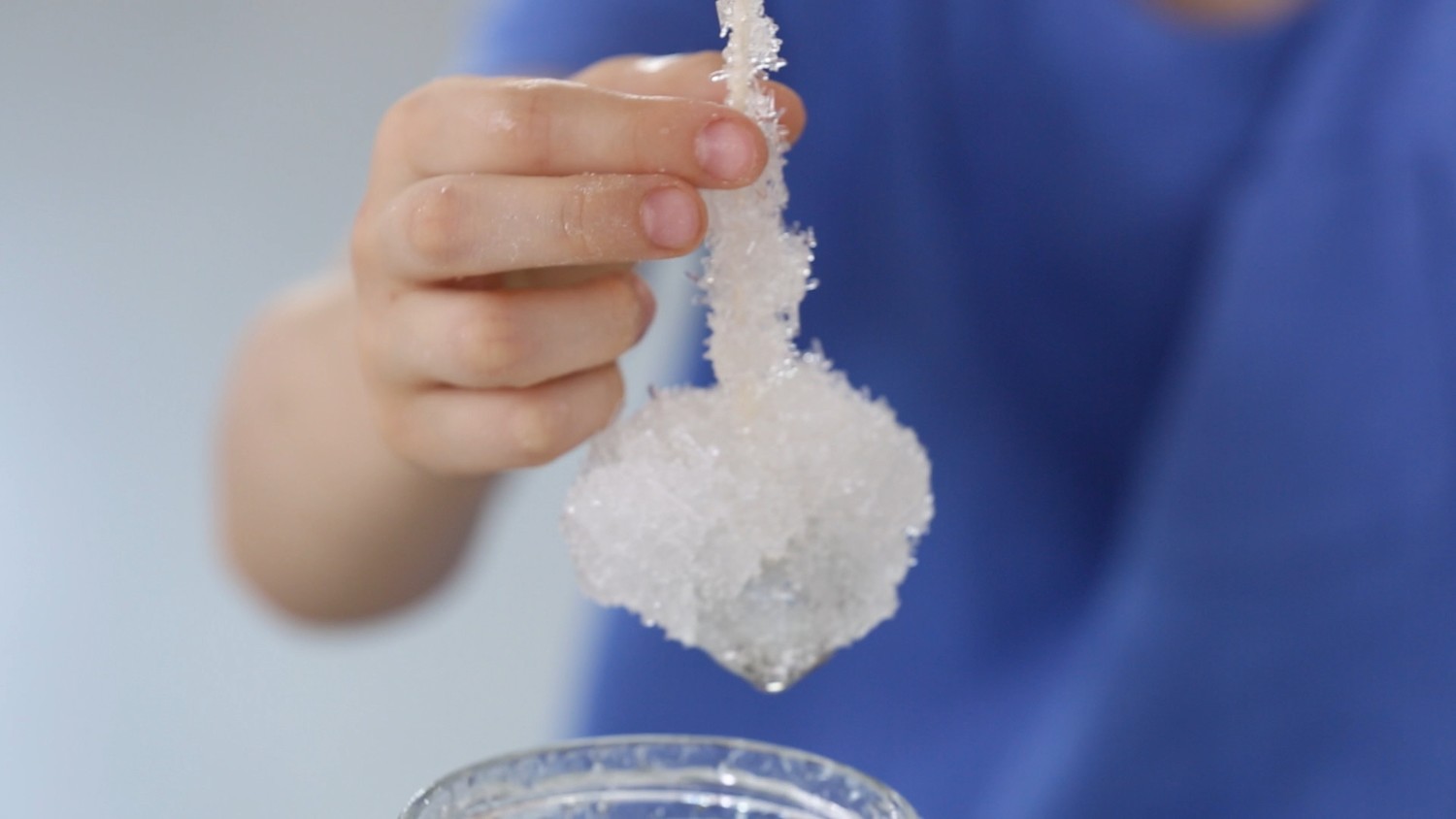
Sugar Crystals

Grow your own Sugar Crystals

Ratio: 1 cup sugar to 1/2 cup water

Materials

1)Sugar
2)Cups
3)Hot water
4)Stick
5)String

Process

Step 1:Add Hot water
Step 2:Add Sugar
Step 3:Mix with stick for ten minutes
Step 4:Get a string and tie it to a ice cream stick
Step 5:Put the string inside the water and the stick at the each end of cups
Step 6: 


Image result for how to make salt crystals

Ratio: 4 Tablespoons salt to 1/2 cup water

Materials

1)Salt
2)Cups
3)Hot water
4)Stick
5)String

Process

Step 1:Add hot water
Step 2:Add salt
Step 3:Mix with the stick for ten minutes
Step 4:Get a string and tie it to the ice cream stick
Step 5:Put the string inside the water and the end of stick touch both side of cup
Step 6:


Findings

Describe your crystals in the table below.


Crystal Type
Shape
(Describe the shape)
Size
(of individual crystals)
Hardness
(Crumbly to Rock Hard)
Borax
Image result for borax crystals
One big crystalLarge, Medium, Small.Hard
Sugar
Image result for sugar crystals

CubeSmallHard
Salt
Image result for salt crystals


CubeSmallHard


________________________________________________________________________

How is salt formed
How is sugar formed
How are snowflakes made 


Explain how the following crystals are formed:


Type
Explanation
Salt
Image result for salt crystal
As the water evaporates, the smallest particle begins to bond together. First, it is a single molecule and then slowly the molecules will bond together forming a crystal. Every single molecule will form into the same shape, the salt crystal will form into a six-sided dice. But it mostly is chunky.


Sugar
Image result for sugarcrystal

As the water evaporates, the fluid becomes more holdable of the water and the sugar molecules will continuously come out of the fluid and becomes hard slowly. 


Snowflakes
Image result for snowflake crystal
It begins to form when the cold drop of water freezes onto a pollen or a dust particle in the sky, this then creates an ice crystal. As the ice crystal falls down, the smoke and other kinds vapour freezes onto the ice crystal building it into a shape like the one on the left. There's the snowflake. 


CRYSTAL TYPES


AIM: TO LOOK AT THE 7 DIFFERENT TYPES OF CRYSTALS


Image result for salt crystal image
Salt Crystals

Image result for sugar crystal image
Sugar Crystals

Image result for borax crystal image
Borax Crystals


7 different crystal shapes


The 6 types of crystals


Type
Number of sides
Picture

2 EXAMPLES

Monoclinic


Hexagonal


Orthormbic


Triclinic / trigonal


Hexagonal


Isometric ( cubic)


Tetragonal